
Exclusive Sue Malden Interview
The images are reproduced with the permission of the BBC Archive.
Oliver Crocker explores the Past, Present and Future of Doctor Who Missing Episodes with legendary archivist and Film is Fabulous! trustee Sue Malden.
When considering the most influential figures in the history of Doctor Who, few could argue that Sue Malden, despite never having worked on the production itself, deserves to be very high on the list. With an economics degree under her belt and a passion for social history, the pioneering archivist changed the course of TV history by becoming the BBC’s first television archive selector; a role specially created following criticism of the corporation’s neglectful approach when it came to retaining programmes.
Having initially joined the BBC as an assistant librarian on a holiday relief attachment in 1971, Sue successfully applied for the position in 1978, bringing with her a wealth of experience gained from working on a seminal 40th anniversary documentary. “40 Years was the first-ever historical compilation of BBC Television…” explains Sue. “I was just lucky that I was the one picked to deal with the production team and, as a result of them asking me to find examples of significant programmes, I learned so much about television history. I was astounded to discover there were so many gaps in the archive, as I had always assumed that programmes were taken off the machine and put on the shelf after broadcast.”
In her groundbreaking new role, Sue set about refining and establishing a selection and retention policy for the BBC archives, building on initial groundwork laid down by her boss, Anne Handford. Educating the BBC establishment, its roots deeply embedded in the tradition of live, one-off performances, would be no easy task. Television was considered an ephemeral medium, with rigid union contracts in place that restricted possible repeats, and the notion of home media an alien concept. But even without the benefit of a TARDIS, the archiving trailblazer had a clear vision for the future.
“I remember being in early meetings with production people, explaining how important it was to keep their programmes, and preserve them for future generations to be able to see them. They all looked at me as if I was mad: ‘What would we want all those old tapes for? Don’t be so silly…’ I would go on and on about them not knowing what the BBC might want to do with its output later, and that not keeping them would be ridiculous, especially when considering the money that had gone into making each production. But they still thought I was bonkers.”
Sue turned the tide of television archiving in a largely analogue world, with limited resources at her disposal. Whilst the records for the BBC’s videotape holdings were stored on a central computer, this was housed in another building and the only way to review any of its information was to request a computer printout. “The VT engineering department ran this computer, which produced great big sheets of paper, about two feet wide. It was then a question of me wading through stacks of inch-thick printouts, which came in the internal post from the computer room, to determine the status of the tapes. They would either say ‘O’, which was the original unedited studio recording, or ‘T’ for transmission, which is what I was most interested in.”
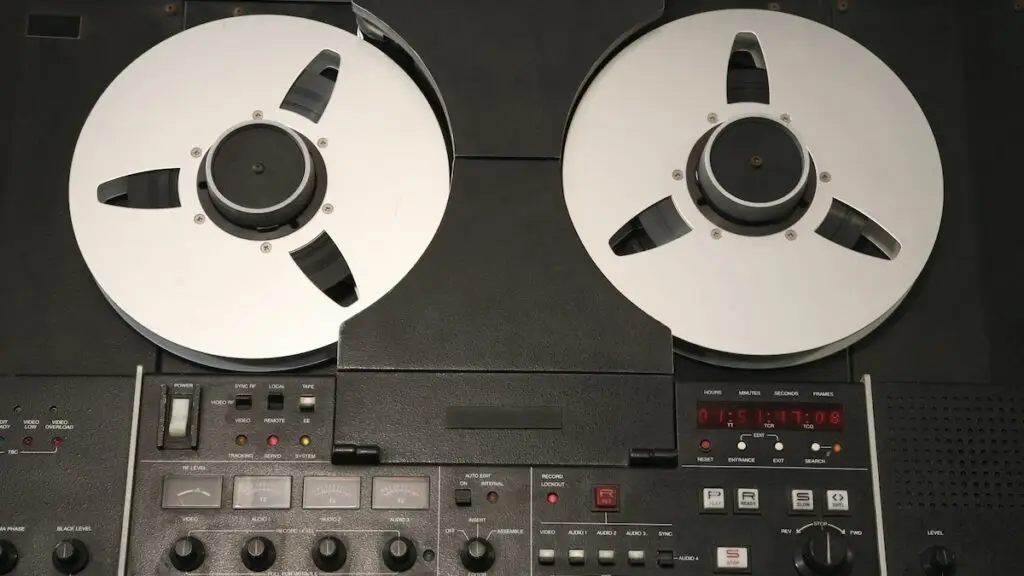
“By and large, I ‘interpreted’ the selection policy I had inherited, which was intellectually very broad, to stop anything I thought should be kept from being wiped. It became an almost day-to-day job for me to change all the records, marking each one with an A-E grading from the retention criteria, classifying the production as culturally important or containing a person of historical interest. I would then send my marked-up stacks of paperwork back to the computer department, where the engineers would update the machine and change the records, at which point the ownership of these tapes transferred from the production department to ‘TV Arch’, basically me personally.”
Having established a system to prevent further programmes from being junked, Sue launched her own vigorous investigation to find out why there were so many gaps in the archives. She decided to use an iconic, long-running programme as a case study. “It was between Doctor Who, Dixon of Dock Green and Z Cars, all of which had such a long stretch of transmission. I knew that Z Cars was in a bad state; when I worked on 40 Years there were only three episodes from the first series available as film recordings. That’s why, until Paul Vanezis found all those episodes in Cyprus, you only ever saw the same clip of Brian Blessed and Joseph Brady bouncing up and down in their police car.”
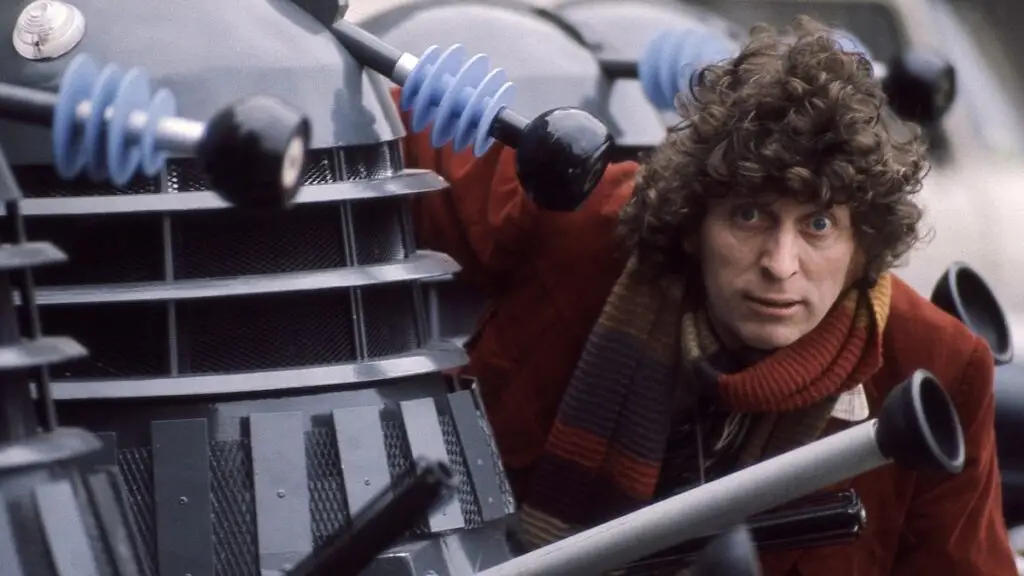
“I’d watched all three programmes a lot, but it was my own personal taste that made me pick Doctor Who; it was different to the other two, as they were more run-of-the-mill, procedural stories and I thought finding one episode would potentially be much the same as the next one. Doctor Who was quite different; I remember watching William Hartnell the most, but Tom Baker is my favourite. I’m not really that into sci-fi, I was more interested in the historical stories, and I remember Phillip Hinchcliffe did one set in medieval Italy called The Masque of Mandragora which was an absolutely lovely production, partly shot on film. I also used to drink in a pub next door to the rehearsal studios in Acton, where Tom Baker would often hold court, usually with his scarf on! Some nights, he would buy any leftover Scotch eggs and roll them around the pub for people’s dogs to catch. He was something else.”
Sue also explains that having a current production team to liaise with was a key factor in her decision. “It was important that I looked at an ongoing series, so that I could contemporarily find out what was going on with their master tapes and film recordings. It was also quite useful to build a relationship with the producer and to let them know what I was doing, which helped later when the story Shada was stopped during the 1979 strike. I put a hold on the ‘O’ master tapes, preventing them from being wiped, as John Nathan Turner was interested in trying to do pick-ups on what they had recorded.”
To assess the archive holdings of Doctor Who, Sue began a painstaking process to determine how many of the 479 episodes broadcast between 1963 and 1978 had survived. Sadly, the computer printouts revealed that the original master tapes for every 1960s recording of Doctor Who had already been wiped. “Each programme had a unique project number for budgetary purposes, as a machine had to be booked for every recording, which was costed to the production team. It was cheaper to re-use tapes, rather than buy new stock, so Drama master tapes would be routinely wiped to make way for new recordings. I’m not saying that old Patrick Troughton stories were taped over with Tom Baker ones, but it is possible.”
“When I started recovering videotapes, I used to have to try and beg for VT viewing time, just to be able to check what was on any tapes I found. Andy Finney, who worked for Enterprises, was really helpful. He was trying to build a definitive catalogue of what pop music the BBC held, so whenever he booked VT viewing time, I would scurry off down to Lime Grove and he would let me use his machine. I sometimes found videotapes in slightly strange circumstances… It had been decided that a videotape could only be reused so many times before it reached the end of its lifetime, at which point the tape used to get put on a machine that cut straight through the middle of it. It must have been horrible to watch that happen. Some of the VT guys used to rescue tapes from this fate and hide them around Television Centre, meaning I then had to go and hunt them down.”
But with no videotapes to track down for the Time Lord’s earliest adventures, Sue headed to the BBC film library at Ealing Studios to find out if any stories survived as 16mm telerecordings, made for international sales. After checking through the printed catalogue for the first 253 episodes of Doctor Who, Sue discovered that only 47 remained in the film library – less than 20% of the programme’s first six seasons. “I was irritated that the production team had sometimes asked for film inserts to be kept, but somebody had decided that the story they had come from should be junked. Once I established how many Doctor Who’s were missing, I wondered if I could find any of them…”
An early result came when Sue found three complete Patrick Troughton stories – The Dominators, The Krotons and The War Games – in the BFI’s National Film Archive, which led to further episodes being recovered from BBC Enterprises. “I’d have shed loads of film cans coming down from Enterprises to my office in Windmill Road, which I would spread all over the floor and sort them out. Having started off with people thinking I was bonkers for wanting to save this stuff, now everybody was curious and wanted to come up and take a look. I remember finding an episode of Sykes and a… in Arabic and thinking ‘Wow, that’s something, we’ll keep that!’”
By the end of 1978, thanks to Sue’s diligence, the BBC now held 118 episodes of Doctor Who starring William Hartnell and Patrick Troughton. There were still 135 missing in action, but this number would continue to reduce throughout the 1980s, thanks in part to the generosity of film collectors in the UK, including Bruce Campbell, Gordon Hendry and David Stead, who all made their 16mm prints available to the BBC archives for scanning. The most recent return from a private collection came courtesy of the late Terry Burnett, who kindly returned two episodes, Galaxy 4’s Airlock and Episode 2 of The Underwater Menace, to the BBC archives in 2010.
Terry’s entire collection has since been catalogued by Film is Fabulous! adviser, Richard Latto, at The National Motor Museum in Beaulieu. “The more I work with the Film is Fabulous! team, the more I’m learning just how much film material was taken out of skips…” reveals Sue. “We had a loan system for film in the very early days and if stuff hadn’t been returned, we had computer generated overdue forms, but of course before you could send those out, somebody had to go and physically check the shelves to make sure it hadn’t come back. Anybody who had to work on overdues hated it, which means I seriously doubt how well they stayed on top of loans. I now realise that quite a lot went out in certain directions and never came back…”
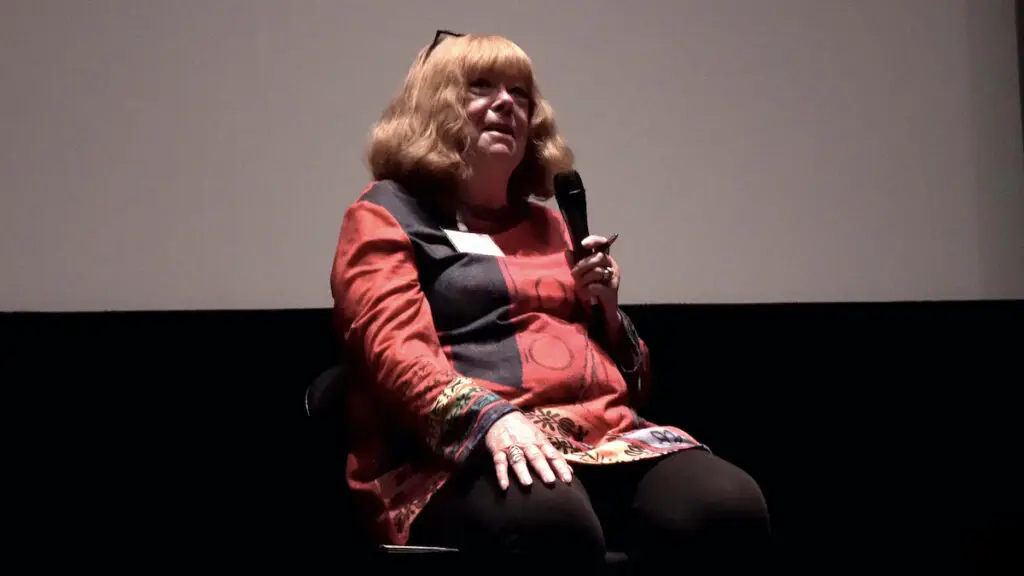
At present, there are 97 missing episodes of Doctor Who and, having personally spearheaded the return of over 100 missing prints back to the archives, Sue feels that collectors returning films, in the same spirit as Terry Burnett’s fine example, is the last chance for future returns. “Because Doctor Who is so well known now, you’re not going to pick up a film can at a car boot sale anymore, those days are gone. The best hope now is the incredible work that Film is Fabulous! is doing and I’ve already learned a lot working with the amazing team. We have to be very careful where Doctor Who is concerned, because this is in no way a treasure hunt and the team are working carefully to instil confidence and build trust with film collectors, which is so important.”
As well as advancing and encouraging public interest, education and training in film as a medium, especially its role within British culture, the Film is Fabulous! team’s ongoing efforts to preserve vulnerable film collections for future generations has led to them recovering an astonishing number of missing episodes of vintage television, which have each been returned to the archives of the original copyright holders. But since announcing their ongoing discussions regarding the cataloguing of several private collections in their entirety, some of which contain missing Doctor Who episodes, the organisation has been inundated with correspondence, speculation and, sadly in one case, a threat of violence against a member of the team that resulted in police action.
Having been associated with Doctor Who missing episodes for nearly 50 years, Sue knows the desire from some sections of the fanbase better than most. “When the fans first became aware of who I was and what I was doing, I found their letters written in green ink quite disturbing. Some fans were so intense, they would send me a little audio cassette with a message on it, enclosed with instructions for me to record a reply on the other side and send it back to them. I didn’t even have anything to play it on, so I had to go around the BBC trying to find equipment to do all that on. Other fans would ring me up whinging that Patrick Troughton wouldn’t talk to them when they called him at home, to which I’d explain they were lucky that I was taking their call! It did take over huge parts of my working day to try and deal with the communication and, whilst I recognise that obsession, I don’t necessarily understand it or fully empathise with the way it sometimes manifests itself.”
“It wasn’t until after I’d left the BBC and started going to Doctor Who conventions that I saw the lovely side of the fanbase, which I hadn’t been aware of before. I remember going to a convention near Oxford and, after I did a Q&A on stage, I was astounded that there were queues of people wanting to come and get my signature. Someone plucked up the courage to ask if they could have a photo taken with me, which was mind-blowing. One guy brought his little girl, who was about 6 or 7, which proved to me that I’d been right to think about the programme’s future for different generations. That was wonderful, as is the fact that thanks to the upcoming Film is Fabulous! supporter scheme, Doctor Who fans can divert their passion into something useful and productive.”
For Sue, five decades on from when she first began returning films to the archive, the thought of sharing a returned episode with Doctor Who fans at a future Film is Fabulous! screening fills the legendary archivist with excitement. “I think it would be an absolutely lovely feeling to be in that room watching a recovered episode with them. I remember watching a Sylvester McCoy story with my son that was shot in his primary school and saying, “Look, the Daleks are in your playground!” Last year, my now grown-up son gave me a little model of a police box and a Dalek as a Christmas present, saying it was about time I had my own TARDIS on the shelf! Hopefully, by working together, we can all put some more missing episodes back on the shelf too.”
It all started out as a mild curiosity in an archive, and now it’s turned out to be quite a great spirit of adventure, don’t you think?
MAKE A DONATION
Film is Fabulous! urgently need your support, in order to preserve vulnerable film treasures. Please select an amount from the drop-down box adjacent, and make a one-off payment via PayPal.
For PayPal functionality, please ensure that you accept cookies.
Options available:
- £5
- £10
- £25
- £50
- £100
If you’d like to donate a larger amount, as a one-off payment, or make a regular donation each month, please email: donate@filmisfabulous.org.uk
Film is Fabulous! Preserving film treasures for future generations.
10th March 2026
Share this post