
Lost Late Night Horror Found
The images are reproduced with the permission of the BBC Archive.
Oliver Crocker interviews the film collector who has collaborated with Film is Fabulous! to retrieve a long-lost BBC classic from the shadows.
For the first time in decades, horror fans will have the chance to devour No Such Thing As A Vampire, the groundbreaking opening edition of the BBC’s controversial, and mostly missing, 1968 series Late Night Horror. The film was not exhumed from a crypt, but a small storage area of The Regent, a 1930s art deco cinema and theatre buried in the heart of Christchurch, Dorset.
Believed to have been destroyed over half a century ago, the vintage film has risen from the dead thanks to Darren Payne, a cinema projectionist and engineer who enjoyed a 30-year career prior to launching Dirt in the Gate Movies, a group showcasing 35mm at The Regent for over a decade. “Film is in my DNA…” explains Darren. “My earliest memory is lacing up Bride of Frankenstein on my dad’s Eumig P8 projector when I was five years old. Watching that movie in a darkened room on a six-foot screen planted a seed early on, which led to my interest in film collecting and ultimately a career in cinema.”
“The recovery of No Such Thing As A Vampire was purely by chance. One of the board members at The Regent found a very small collection of reels; we’re not too sure of the background of these films, but they have certainly been there for several years and were on the verge of being thrown away. I was asked to check one of the rather nondescript silver cans, which had the words Late Night Horror handwritten on the label. I’m a passionate horror aficionado and the title rang a distant bell with me…”
What happened next took Darren’s breath away. “I took the film home, where my projection equipment is the best available on the market. I’m fastidious with making sure it is clean, as I didn’t want to risk damaging this film in any way. I could see it was a black and white film recording print and when I screened it, lo and behold it turned out to be the long-lost first episode of the Late Night Horror series. I had to pinch myself; it was an astonishing and quite emotional moment. I wouldn’t underestimate that experience of being the first to watch a production for the first time in nearly 60 years.”
The BBC’s six-part Late Night Horror series was a passion project for producer Harry Moore, a former story editor who had overseen the creation of the corporation’s prestigious Thirty-Minute Theatre series, followed by their celebrated 1967 Sir Arthur Conan Doyle adaptations, before sinking his teeth into a genre he felt had been neglected on British television. “I read recently that in America, horror series are being made especially for housewives to watch while they are doing their ironing in the afternoon…” Moore explained to the Lincolnshire Echo’s Diane Roberts in April 1968. “Personally, I think horror is more effective late at night.”
The “appetisingly entitled” series had first been previewed in The Stage and Television Today in October 1967, when Michael Billington interviewed Moore, who stated “I think horror is more frightening on television… If you hear a horror story on the radio, you make your own pictures, but I think you tend to censor them in terms of your own experience. You cut out what you don’t like. With television, I think, you become much more involved.” And by harnessing the 25-minute format, Moore felt it would be easier to “screw up the audience’s tension…”
Moore outlined his vision for a late-night offering of unease to Diane Roberts: “Horror stories often stick to a formula… in planning a series like this, one has to ensure that there is as much variety of mood and situation as possible… We have gone all out to make them really scary. We have great casts and good writers. Roald Dahl is a good friend of mine and I have used one of his best stories, William and Mary. It is not the Frankenstein type of horror. Nor psychological horror. We have tried to take everyday situations which are believable and given them a horror treatment.”
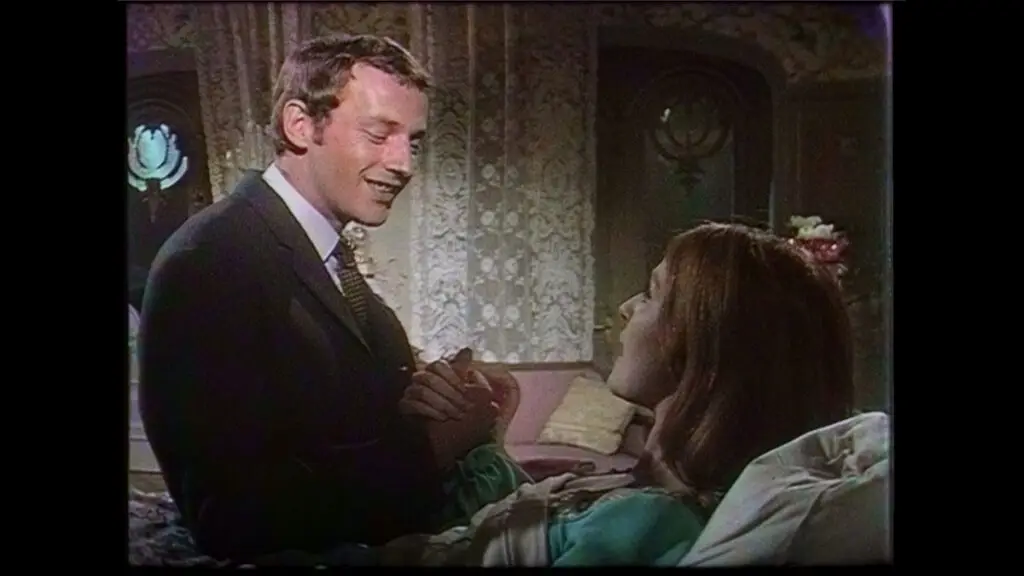
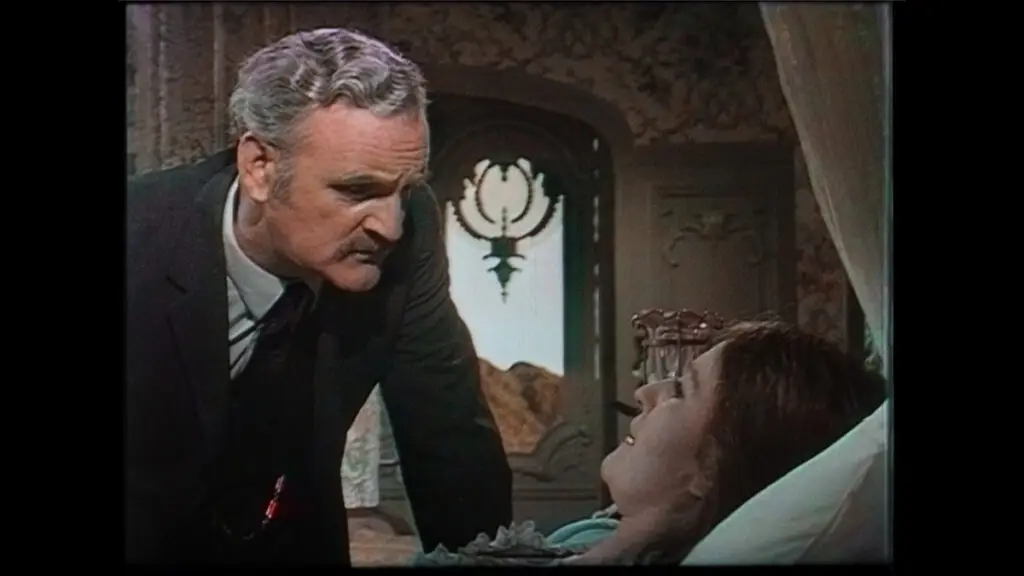
Each of the anthology tales boasted an all-star cast and the gothic opener No Such Thing As A Vampire starred Meg Wynn Owen as Alexis Gheria, who falls mysteriously ill and is being cared for by her husband, played by Hammer Horror favourite Andrew Keir. Wynn Owen shared her experiences of making the episode, as reported in the Lincolnshire Echo: “During rehearsals, it all seemed rather funny… But when we came to film it, with holes in my neck and blood trickling down, I was quite scared. There was definite extra tension among the crew on the set.”
The multi-camera studio-based drama, which also utilised a smattering of library stock film footage, was helmed by trailblazing director Paddy Russell. Telerecorded on Wednesday 13th September 1967, the production was broadcast on Friday 19th April 1968 at 10.55pm and attracted 1.8 million viewers; the highest audience for the series, and one of the largest that had yet been recorded on BBC2 since the channel launched in 1964.
Prior to the discovery of No Such Thing As A Vampire, the only other episode known to exist was the chilling The Corpse Can’t Play, where a children’s party is disrupted by an uninvited strange boy. This disturbing tale also benefited from Paddy Russell’s presence in the director’s chair, meaning her complete Late Night Horror oeuvre has been resurrected. The rest of the series remains missing, including Dahl’s supernatural quest for brain preservation, and the Rudolph Cartier-directed The Triumph of Death, which saw Claire Bloom return to the BBC for the first time since her starring role in 1962’s Wuthering Heights. This generated a plethora of publicity for Late Night Horror, where Bloom swapped the wild hills of the Yorkshire moors for a harrowing haunted mansion.
Horror is one of the most subjective creative mediums and the bold new series was not to everybody’s taste. Reviewing No Such Thing As A Vampire for The Stage and Television Today, Angela Moreton commented “it is too early to judge the series on the first of the six plays, but the others will have to be a lot more terrifying than this one was.” The series did grow on Moreton, who following the fifth episode, directed by Naomi Capon and starring Ronald Hines and Michele Dotrice, wrote “There was a nightmarish quality about The Bells of Hell, which came closest to capturing the eerie sense of terror that this series is aiming to establish. The trouble with horror is that it can be so oversold that inevitably it disappoints. Yet this play left a subtle trail of shudders behind it.”
The BBC also conducted Audience Research reports for each sinister story, with members of the BBC2 Viewing Panel giving No Such Thing As A Vampire a reaction index of 53, while the following instalments achieved scores of 48, 60, 56, 52 and 65 respectively. Assessing the six-part series as a whole, the panel felt that Late Night Horror had not always met expectations of delivering lurid, blood-curdling tales, with suggestions that the BBC needed to “review their definition of horror”. However, praise was given to most of the plays being “well-written and entertaining up to a point” and that the storylines had been “strong enough for even the toughest of nerves.”
The series finale, a John Hawkseworth adaptation of Arthur Conan Doyle’s The Kiss of Blood, directed by Richard Martin, garnered the most praise… and caused the most controversy. The BBC’s Audience Research report highlighted the episode as “The best of the series for its successful concealment of the nature of its terribly gruesome climax and restrained use of the macabre… Every minute was dynamic and the shock devastating.” The brutal ending, in which Roy Dotrice’s Lord Sannox exacts “a swift and terrible revenge” on his wife, one of the most notorious women in London, also appears to have sealed Late Night Horror’s fate as a one-off series.
The day after the broadcast, The Daily Mirror reported that the series had “given viewers the creeps”, with one correspondent admitting “I can’t go to sleep afterwards. Why do I punish myself by enduring these eerie ghost stories?” The People on Sunday were also critical of the final episode, questioning “one wonders what ‘too much’ means to the BBC. It may be that the whole approach of television to horror needs considering.”
Before any critics had been able to take a stake to the series, Harry Moore had predicted a far different reaction. Prior to its launch, the producer told the Sunday Mirror’s James Pettigrew that “I think we will get terrific viewership. After all, horror is just a form of relaxation.” Following the fallout of The Kiss of Blood, Moore confessed in June 1968 that he had received more mail for Late Night Horror than any other show he had made. Gleefully recalling those horrifying closing moments to the Lincolnshire Echo, Moore revealed that during the recording of the jaw-dropping finale, Sean Connery, who was then married to the episode’s leading lady Diane Cilento, was “seen to pale several times at some sequences, particularly at the end when something happens to Diane…”
Moore also explained to Michael Billington that the BBC special effects department had “a field day” realising Cilento’s character’s gory fate, creating “lovely gadgets to cut lips and enable one to see the blood coming out…” A handful of the BBC2 Viewing Panel saw this hideous moment in colour, noting that “the blood flowing from Lady Sannox’s excised lower lip, looking exactly like the real thing, was an impressive and terrible sight.” Henry Moore also confirmed that “a great deal of experimenting” had gone into finding “a mixture which looked like real blood on colour TV.”

Significantly, Late Night Horror was the first-ever horror production to be made by the BBC in colour. Having already ensured the episode was digitally captured by the film experts at R3Store Studios in London, Film is Fabulous! is currently investigating the possible restoration of the original colour version of No Such Thing As A Vampire, using the ‘colour recovery’ process, in a further commitment to preserve the historical importance of this landmark drama.
This will also provide a unique delicacy to be savoured by audiences for the first since its solitary 1969 repeat, when the restored film is screened as part of Grindfest 2026 at The Regent on Sunday 20th September. Whether or not its vivid crimson tones are able to be fully restored, Darren Payne promises that No Such Thing As A Vampire is still more than capable of sending shivers down spines in black and white.
“I was blown away when I first screened the film at home…” Darren enthuses. “I was surprised by how detailed and sharp the image was. Over the years, I’ve seen some film recordings that are quite soft, or have strobing artefacts, whereas the No Such Thing As A Vampire print has good blacks and decent contrasts. There’s something about horror in black and white, it adds another layer, but I would still love to see the original colour recovered, as I believe the whole series was commissioned around the basis of experimenting with colour. People like Harry Moore and Paddy Russell were pioneers; they were doing something new and, at the time, something unique, which I think is important to remember from an historical television standpoint and not overlook.”
“Sometimes old TV shows can be a bit overrated, especially as these studio-bound, single location outputs can very often be a little bit predictable or tiresome. I don’t want to give too much away, but No Such Thing As A Vampire is a fantastic episode; the narrative hinges around these superb performances and it’s absolutely gripping. Another thing that struck me was the very elaborate camera moves for a studio-based production, especially when considering the size of the cameras back then. It’s a stunning watch and I just can’t wait to share it with everyone.”
“I am not a treasure hunter; I don’t believe these discoveries should be kept underground. I am really passionate about this episode being seen again and I wanted to find the best collaborator who shares the same vision and values around film preservation. This led me to Film is Fabulous! who, as well as arranging the scanning, restoration and return to the BBC archives, kindly helped us secure a license to screen No Such Thing As A Vampire at Grindfest 2026, for which I’m eternally grateful. I don’t think there could be a better way for like-minded individuals to enjoy this shared experience. Horror connects people and our loyal festival audience is going to be absolutely over the moon. It really has been the perfect collaboration.”
Thanks to the combined efforts and shared values of Film is Fabulous! and film collectors like Darren Payne, there need be No Such Thing as a Missing Episode…
Film is Fabulous! has collaborated with BBC Archives to return this newly recovered programme. The episode will be screened at The Regent in Christchurch, Dorset, on Sunday 20th September 2026, as part of the three-day Grindfest event.
MAKE A DONATION
Film is Fabulous! urgently need your support, in order to preserve vulnerable film treasures. Please select an amount from the drop-down box adjacent, and make a one-off payment via PayPal.
For PayPal functionality, please ensure that you accept cookies.
Options available:
- £5
- £10
- £25
- £50
- £100
If you’d like to donate a larger amount, as a one-off payment, or make a regular donation each month, please email: donate@filmisfabulous.org.uk
Share this post
Film is Fabulous! Preserving film treasures for future generations.
23rd May 2026