
Missing Julie Felix Show Found
The images are reproduced with the permission of the BBC Archive.
Oliver Crocker explores how the combined efforts of Film is Fabulous! and De Montfort University are putting a pioneering musician back in the spotlight.
Modern audiences will have a chance to rediscover a seminal figure from the Sixties folk movement and counterculture scene, thanks to the recovery of approximately 22 minutes from an episode of the BBC’s light entertainment programme Once More with Felix. The 820 feet 16mm film print, found in the private collection of a former industry professional, contains most of the final episode from the first series, hosted by the trailblazing Californian singer/songwriter Julie Felix, produced by the legendary Stanley Dorfman and featuring scripted sequences by prolific comedy writer Neil Shand.
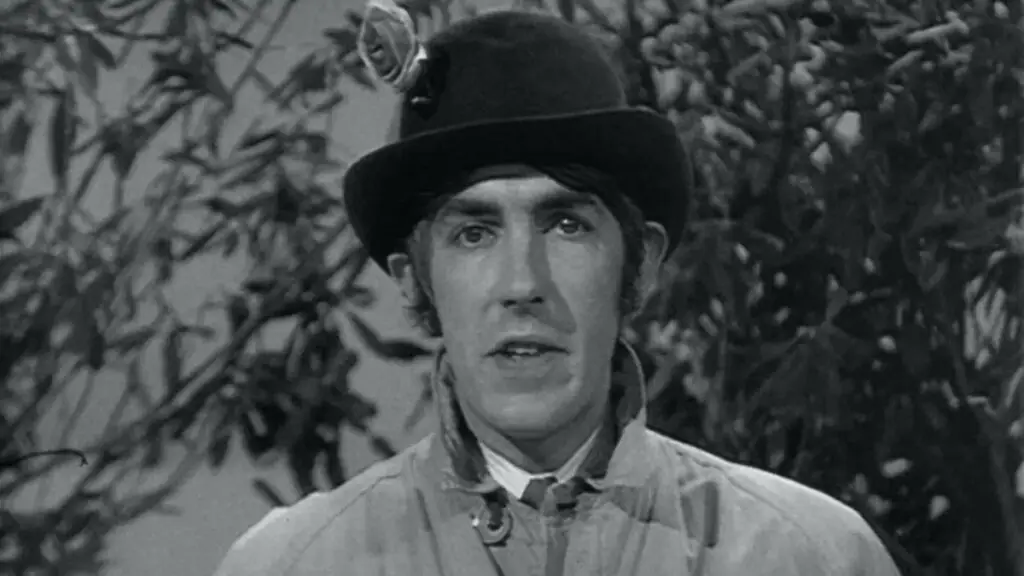
Telerecorded on Thursday 8th February 1968 and broadcast less than two months later on Saturday 30th March, the episode’s musical performances came courtesy of special guests Noel Murphy and Paco Peña, as well as several numbers by Felix herself, accompanied by an orchestra conducted by musical director John Cameron. Whilst the opening of the episode is missing from the recovered reel, comedy fans are in for a treat thanks to a lengthy sketch starring the inimitable Peter Cook, performing as monotonal know-all E.L. Wisty, which remains perfectly intact and hilariously funny.
The discovery of this precious footage represents a significant boost to the BBC archive holdings for Once More with Felix, which took the primetime Saturday night slot during BBC2’s first week of a ‘full colour service’, which began broadcasting 27 hours of weekly colour television from Saturday 2nd December 1967. Thanks to the presence of chroma dots in the recovered 16mm film print, Film is Fabulous! has once again invested in the colour recovery process, in a further commitment to preserve this historically significant production.
The titular star of the show had enjoyed a meteoric rise to fame since moving to London in 1964. Having initially set her heart on becoming an expert sword fencer, Julie Felix’s Mexican father had taught her to play the guitar, while the first songs she learned came from her American mother’s collection of Burl Ives LPs. She continued to sing whilst studying Speech and Drama at the University of California, Santa Barbara, before spending two years thumbing her way across Europe, singing to earn her supper in cafes.
By 1966, Felix had already become a household name in the UK, with contemporary press reports celebrating her as a ‘delicate, olive-skinned beauty with a wanderlust and a pleading voice’ who had been ‘enthusiastically received by British folk audiences.’ Having taken the capital’s folk scene by storm and been signed by Decca, television appearances quickly followed. Early appearances included The Eamonn Andrews Show, where her warmly received debut earned her an immediate return, Heartsong and Tonight in Person, before a chance encounter with David Frost in a lift led to an invitation to complete the regular line-up of The Frost Report, where Felix provided a blend of family-friendly folk songs, with the occasional satirical or activist piece snuck in, to compliment the comedic output of Ronnie Barker, John Cleese, Ronnie Corbett and Sheila Steafel.
Frost was instrumental in securing Felix her own show, which was an instant hit. An edition of Once More with Felix entered into the 1968 Montreux International Television Festival was described in the Daily Express as “a beautifully produced piece of television by Stanley Dorfman.” The series laid the groundwork for more female singers to headline their own BBC entertainment shows, with the corporation commissioning Moira Anderson Sings, Cilla, Lulu’s Back in Town and This is Petula Clark in quick succession. The first series of Once More with Felix was so successful that it was extended for an additional month’s worth of episodes, followed by a second series of eighteen episodes in 1969, produced by Mel Cornish. Musical guests joining Julie throughout the run included The Bee Gees, The Kinks and Dusty Springfield, while the likes of Jim Dale, Roy Kinnear and Spike Milligan amused viewers during the scripted ‘talking’ sections.
Whilst audiences will soon have the chance to enjoy the recently recovered Once More with Felix footage for the first time in nearly 60 years, a member of the Film is Fabulous! team was lucky enough to witness one of Julie Felix’s final live performances before her death in 2020. “I know it’s a cliche to talk about stars having a kind of ‘X factor’ presence, but Julie Felix was absolutely magnetic…” recalls Professor Justin Smith. “It’s remarkable the way that certain artists from a bygone era can enjoy a comeback in their later years. Julie was a star who was well and truly rediscovered, gigging on a regular basis and exhibiting sheer presence and stamina in her twilight years. Julie put the political message of her songs across with incredible passion and commitment, and seeing her perform live, plugging into her roots and still hitting the spot, was extraordinarily moving and compelling. The audience absolutely loved her; she went down a storm.”
The recovery of this long-lost Once More with Felix footage is a fitting and exciting extension to an exhaustive research project undertaken by Justin’s colleague Dr. Alissa Clarke, Associate Professor in Drama at De Montfort University. The diversely skilled academic, who also serves as Co-Curator of DMU’s Peter Whitehead Archive, has spent years documenting and celebrating Julie Felix’s life and career. “Peter Whitehead is probably best known for making countercultural documentary films in the 1960s and for being the godfather of the pop music video…” Alissa explains. “Peter filmed some of Julie Felix’s pop promos and live performances, including a sold-out concert at the Royal Albert Hall, which came off the back of work that she’d done with Christian Aid, as part of their Tackling World Poverty campaign. This anticipated all the things that we would see done later by Bob Geldof, only twenty years earlier and by a woman.”
Dr. Clarke continues: “In 2017, DMU hosted a series of Summer of Love: Revisited events at the Royal Albert Hall, where we screened some of Peter Whitehead’s incredible archive publicly for the first time. What was really interesting in the midst of this concert footage, in stark contrast to fans going absolutely nuts and clawing at the clothes of the Rolling Stones or Led Zeppelin exhibiting cock rock at its finest, was how Peter had very deliberately and delicately positioned Julie Felix as a lone figure; just her and her guitar, surrounded by a mass audience, tapping her shoe and commanding the space. She was real, authentic and natural.”
“Following this ‘Icons of the Hall’ screening, Julie came along to speak and also played a range of songs, including Bert Jansch’s Needle of Death from the 60s, which is about opioid death, and a song she’d written called Corbynista, because she was a fan of Jeremy Corbyn. Julie was someone who very much framed herself as a folk singer, an activist, and a humanitarian; there was a real sense of her knowing that her voice had changed and an unabashed embracing of emotion. She was also quite self-deprecating and joked that there was no way she could fill the Royal Albert Hall now, unless she forced people in with a gun! She was wonderful and definitely played with the audience, who were either rediscovering her having remembered her TV shows, or younger people who had perhaps come to see some of the Led Zeppelin footage and were discovering her for the first time.”
“There was also a real awareness of the fact that, at one point in time, she’d been extremely high profile. Julie had hosted the first colour TV series on the BBC, which was sold and shown all over the world, where she was better known than some of her guests, including Leonard Cohen, who made his UK television debut on Once More with Felix. Then she’d deliberately taken herself out of the fame game and it had never returned, whether she’d wanted it to or not. But she had carried on and really invested in the idea of herself as a troubadour; someone who was now performing, by and large, in much smaller folk clubs, passing on stories, news and ways of connecting between human beings. She very much felt that there were still causes to fight for, and that it was important to be really angry. Following the Royal Albert Hall event, there was a sense of renewed interest in her practice and in the last years before she passed away, she was being invited to much bigger events to perform.”
For Alissa, the opportunity to record a series of intimate video interviews with Julie, as well as capture several of her concerts for an as-yet unreleased documentary, brought her connection with the singer full circle: “I grew up listening to Julie Felix’s music and, as someone who headed off into drama, the pieces I liked best were her really dramatic versions of Masters of War and The Spring Hill Disaster. To interview Julie and spend time with her in my academic career was an absolute pleasure; she was quite playful and very dedicated to her yoga practice and used to hang upside down for a period of time every day to stretch her back. Her shtick on stage was to always end with a high kick, demonstrating her vigour and her delight of being on stage, which she continued to do up until just before she became seriously ill.”
“What was interesting, and what we saw repeatedly when she was playing and working with an audience, was a process of winning people over. Not long before her death, Julie was invited to perform at the Isle of Wight Festival. At the beginning, people were chatting amongst themselves in this smallish marquee, which was absolutely jam-packed. Then there was a process of seeing the tide turn, partly because of her naturalness and warmth, but also her engagement and really caring about the audience. Her capacity to tell stories in the way she sang was present; she talked about ‘communing’ with the audience and being carried by the song.”
Dr. Clarke is hopeful that the return of this Once More with Felix footage to the BBC Archives will help give Julie more recognition for her achievements as a leading light. “Julie is one of several women whose wider legacies and impact should be acknowledged. Not only do I think it is important to acknowledge her as a fine musician and song writer, but also someone who had this warm, generous and connective presence in terms of how she managed her TV shows. Julie was operating in a male industry but found her way through it and forged her own pathway, which feels like a strong story of inspiration that other people can connect with. She also worked out how she wanted to be represented in the context of the BBC, whilst recognising that there might be certain things that she had to do to appease their structures.”
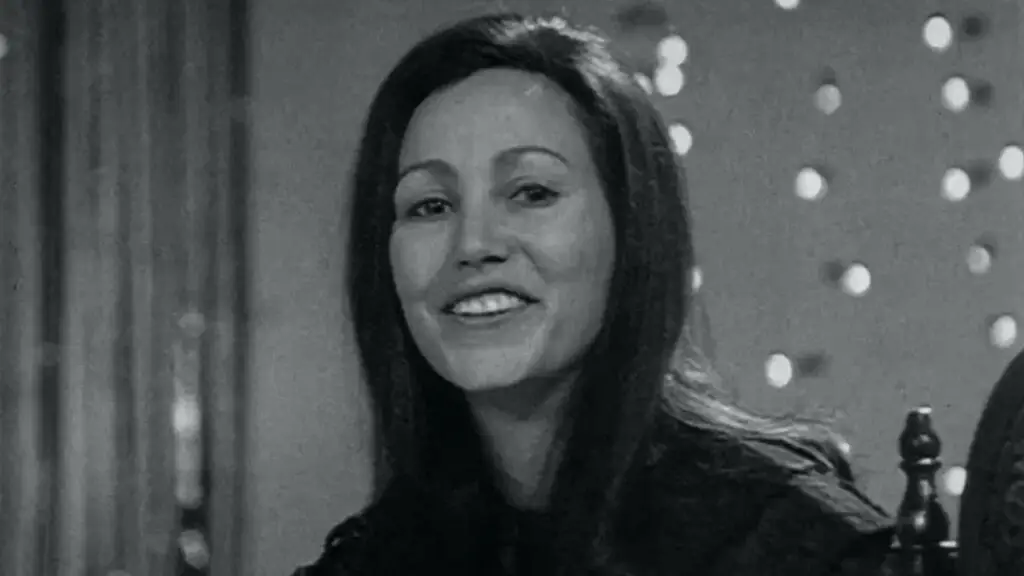
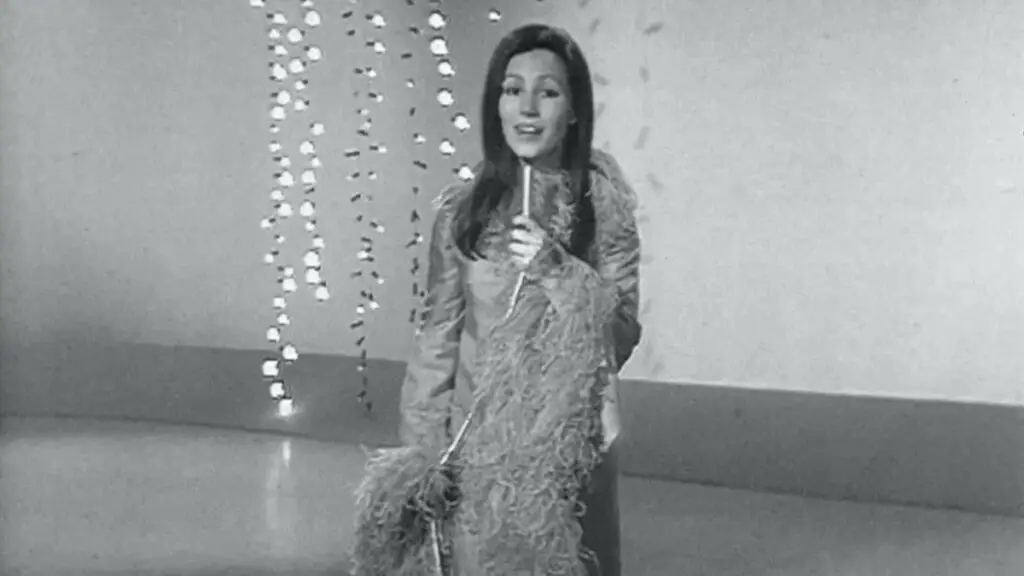
Towards the finale of the recovered episode, Julie sings a rousing rendition of Saturday Night, a version of Donovan’s Young Girl Blues. “Donovan wrote Saturday Night for a female voice and with Julie in mind…” Alissa confirms. “John Cameron helped with the arrangement of it, but the BBC censored the song, because it’s about a woman alone at night and has a reference to female masturbation. ‘Myself I touch, but not too much. I hear its degrading.’ I think Julie had to change the words or that bit couldn’t be heard. I’m excited to see how they covered this. I’d also be really interested to see what she’s wearing as well, because around that period you start to see lots of countercultural figures and pop stars wearing outfits from a 1960s boutique called Granny Takes a Trip on the Kings Road. I also believe Julie wore a dress designed by Val Shafer and we might get to see one of those outfits in colour, which would be delicious.”
“I hope there are more episodes out there waiting to be found by Film is Fabulous! The film reel they have found is missing the opening, in which John Cameron played the opening music, with Julie singing over it. At one point in the series, Julie missed the opening bar, and so John had to rotate the song and make the music fit a more compressed version, all while having to manage a whole live orchestra! Julie also talked about being really stoned whilst singing with Leonard Cohen, meaning one song lasted for a really long time, because they just kept cycling back round and round to the beginning, forcing Stanley Dorfman to make the decision about how the song should end. I would love to see those little bits of naughtiness, playfulness and relaxed subversion by Julie.”
Professor Justin Smith is also excited for Julie’s voice to be heard once again: “I think it’s really interesting the extent to which figures from Sixties counterculture stand the test of time. Although, in a media sense, Julie became a television celebrity by having her own show in the 1960s, I think she would want to be remembered as a folk singer and a really committed socialist, which she remained to the end of her life. It was sad when she passed away, but she would have known that she was loved and respected.”
“And thanks to her twilight renaissance, Julie’s music wasn’t a distant memory that only happened 60 years ago. Her voice and presence are still alive and kicking and I think anyone that helps present something new, unexpected and refreshing to younger generations, putting them in touch with a musical heritage that might otherwise be hidden or lost in a world of streaming playlists, is really precious. Julie Felix did that throughout her life and now, thanks to the recovery of this edition of Once More with Felix, her music will be introduced to an even wider modern audience.”
Film is Fabulous! has collaborated with BBC Archives to return this newly recovered programme, along with other recently recovered missing episodes.
MAKE A DONATION
Film is Fabulous! urgently need your support, in order to preserve vulnerable film treasures. Please select an amount from the drop-down box adjacent, and make a one-off payment via PayPal. Options available:
- £5
- £10
- £25
- £50
- £100
If you’d like to donate a larger amount, as a one-off payment, or make a regular donation each month, please email: donate@filmisfabulous.org.uk
Film is Fabulous! Preserving film treasures for future generations.
16th September 2026
Share this post