
The Beatles Top of the Pops
The images are reproduced with the permission of BBC Archives.
Oliver Crocker goes behind the scenes of a defining moment in music history with former BBC cameraman, Alec Bray, and The Beatles’ first performance for Top of the Pops.
On Saturday 30th May 2026, whilst attending the British Film Collectors’ Convention at Oxted’s Barn Theatre, the Film is Fabulous! team was presented with several items from the estate of a deceased film collector. One of these archive rarities, stored in its original BBC film can, was a unique and pristine 35mm negative of The Beatles’ first-ever appearance on Top of the Pops.
The earliest editions of the long-running pop programme were broadcast live from the BBC’s Dickenson Road Studio in Manchester. However, owing to their phenomenally busy schedule, The Beatles were allowed to pre-record a mimed performance of their new single Can’t Buy Me Love, along with the B-side You Can’t Do That, at the BBC’s Television Theatre in Shepherd’s Bush on Thursday 19th March 1964.
The two inserts were played for the first time on Wednesday 25th March – the thirteenth ever edition of the iconic chart show – followed by repeat broadcasts over subsequent weeks, during which the singles were played on a back-projected screen, with the studio audience dancing in front. Most of the early episodes are missing from the BBC archives and, barring some poor-quality off-air footage, The Beatles’ earliest Top of the Pops performances have remained unseen for over 62 years.
However, prior to the recent recovery, distinct fragments from the long-lost studio recording had survived as crystal clear images emblazoned onto the mind of Alec Bray, who worked on Camera Crew 7. On Wednesday 18th March and Thursday 19th March 1964, in the days before caption generators, Crew 7 were scheduled to shoot hand-painted card captions of the racing results, which were then superimposed over shots from a live outside broadcast, from the BBC Television Theatre.
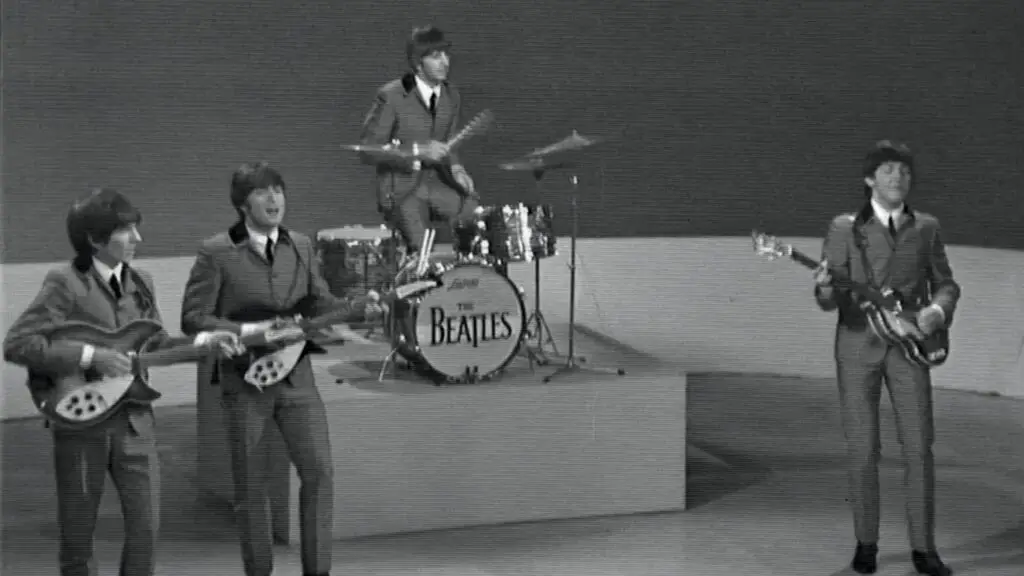
During the course of the Wednesday, the crew started to hear rumours that the next day would be more involved, as Alec recalls: “We were used to working irregular hours and were told to expect to work late on the Thursday, no more than that. After lunch, we learned that we were going to be shooting inserts for Top of the Pops. Most of the crew had worked with every famous name in showbiz, but when we found out we were going to be recording The Beatles’ first-ever appearance on Top of the Pops at 7pm, there was definitely a buzz in the studio. I must admit that I was quite excited.”
Alec’s ticket for the evening was to ride ‘The Mole’; a three-man-operated counter-balance crane. The formidable piece of kit had already gone through several design iterations before Alec first climbed aboard: “It started off as the ‘Houston Fearless’ crane in the United States; measuring about 18 feet long and weighing two tonnes, it was a beast. In the film industry, a camera crane would normally be tracked, whereas in a television studio it was free running. It would originally have been steered by using a tiller, but then a platform was added, with steering and suspension reportedly taken from a forklift truck.”
“The cameraman, who sat at the front, was able to pivot himself and the camera around the central support pillar, his weight balanced by a bucket at the back containing lead weights. Then you had the ‘Swinger’ on a platform, who moved the jib up-and-down, and side-to-side on a pivot, while I was the ‘Tracker’, basically the driver of the Mole, standing on the platform at the back. The BBC had made changes to the Television Theatre, putting a production control area behind the stage, but it was still very small for the entertainment shows that were shot there. They extended the stage by ripping out half of the stalls, with one side of the theatre retaining its audience seating, in front of which Camera 4 was usually positioned. The other half was converted into a ramp running all the way to the back of the theatre, which is where the Mole could do tracking shots.”
Director Johnnie Stewart wanted to open the video of You Can’t Do That with a dynamic tracking shot; beginning with a close-up of a swirling lighting effect on the background above Ringo Starr’s drumkit, before pulling back to reveal all four members of the band. “We rehearsed this opening shot with stand-ins…” explains Alec. “We didn’t have a script, so we just received instructions as to when we should track back, but when we did the first rehearsal, the director said, ‘Can’t it go any faster?’ To which the senior cameraman on the front of the Mole thankfully said, ‘No, we’re going as fast as we can!’”
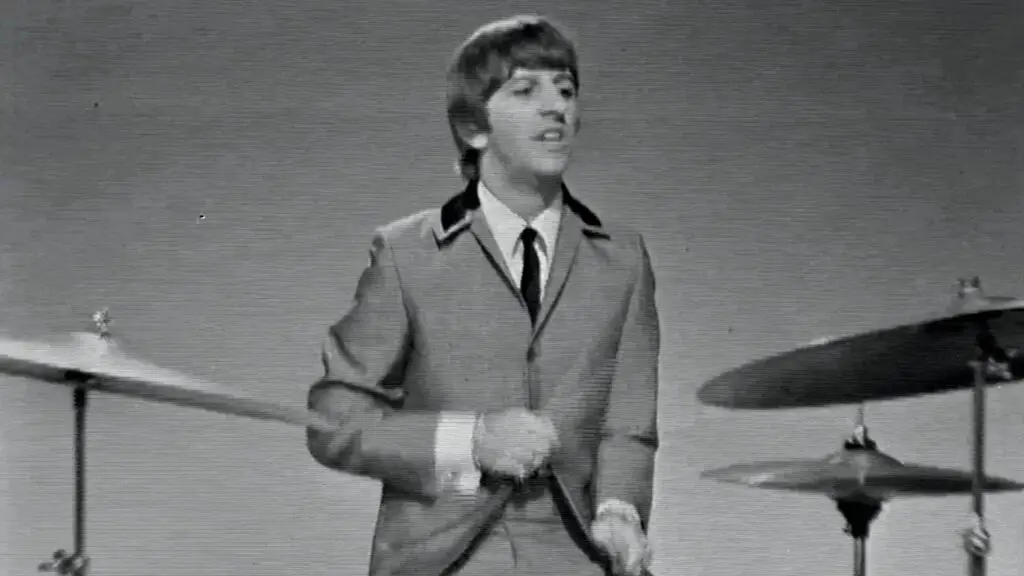
The speed control for the Mole’s motor came via a carbon pile rheostat, operated via two levers either side of the steering wheel. “At its maximum speed, the Mole could reach 8mph in the studio; that’s about 12 feet a second, which, in a confined space, is very fast. I haven’t got a scale diagram or floorplan of the Television Theatre, but I calculated that it would probably have taken about six seconds to get from one end of the studio to the other, so you can imagine my delight when I heard that the opening shot of You Can’t Do That lasts exactly six seconds!”
To achieve this speedy shot, Alec was in danger of damaging BBC property: “When we came to do the recording, we were in position above Ringo and I had the controls in full reverse, with my foot on the brake. As soon as we received our cue, I took my foot off the brake, and we flashed our way to the back of the studio as fast as we could. Many years later, I found a ‘Mole Crane Code of Practice’ book, issued by the BBC, which explicitly warned that ‘the Tracker must not put the crane under power with the brakes on, as this can cause severe overheating of the carbon pile rheostat…’ Well, I didn’t know there were any rules at the time!”
Whilst Alec was unaware he had been screeching over the rulebook to achieve the innovative shot, BBC crewmembers did know there were certain codes they had to follow in the studio, especially in the presence of talent. “At this time, all the Tech Ops people wore shirts and ties…” remembers Alec. “This dress code was fine for drama and sitcoms, but we were at such variance with the acts on Top of the Pops; we all looked like right old fuddy-duddies! We also had to wear soft-soled shoes, for which we got an allowance, to reduce noise on the studio floor.”
After the opening shots of You Can’t Do That, the three-man Mole team had to join forces for two more ambitious camera moves. “We had another very interesting shot to achieve, which started on a wide shot of the four Beatles, before tracking into a close-up of John Lennon. The studio cameras in the TV theatre were Pye Mk5’s, which had replaced the previous Marconi MkIII’s during a recent refurbishment. Fitted with four lenses on the camera turret, Camera 1 on the Mole was using the wide-angle lens, as this minimised the risk of any camera shake during a tracking shot. But in order to achieve the desired close-ups of John Lennon, we had to literally get close to his face.”
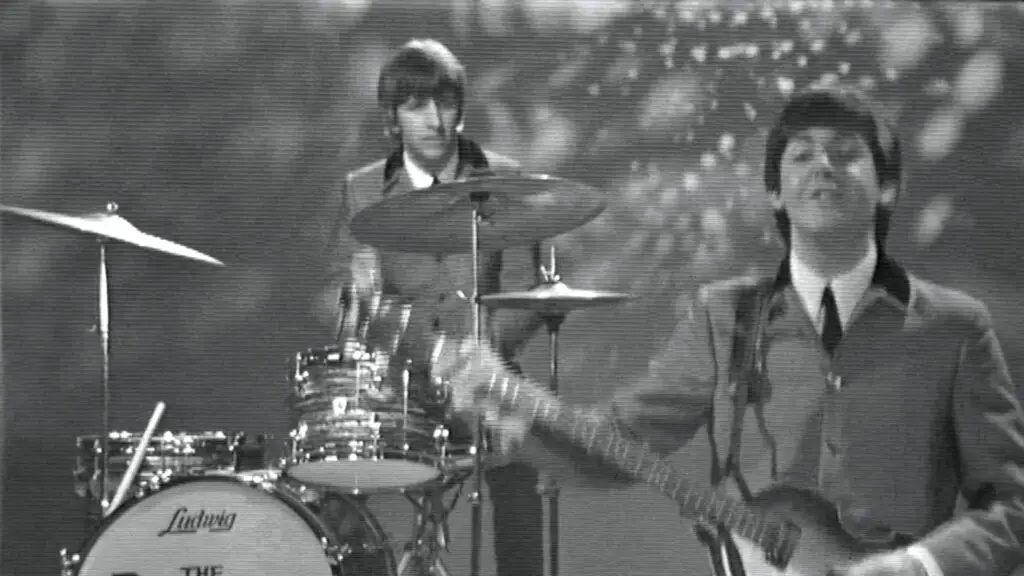
“For the continuation of this shot, we then had to track into a three-shot over John’s shoulder, capturing George and Ringo. To get the camera head in the correct position required a co-ordinated effort between the Swinger, moving the camera arm about its main pivot, and the Tracker, getting the body of the crane into exactly the right place. There was no indication of the speed on the Mole, it was all done by feel and, as our Swinger was a relative novice, I knew it was going to be tight…”
“We’d rehearsed earlier with the stand-ins and worked out our timings. Then when The Beatles came into the studio, John Lennon looked down at the floor markings and said “Here, is that where we’re supposed to stand then?” Nobody on the floor answered him and so, from the back of the crane, I shouted out, ‘Yeah – step in front of that mark and we’ll hit you…’ which was a stupid, hostage to fortune thing to say!”
When it came to the recording of You Can’t Do That, there was almost a collision between Mole and Beatle! “On the first take we tracked in, the crane arm swung and the camera lens got very, very close to John’s face… and he corpsed! He gamely carried on miming and we finished the rest of the shot, but we knew they’d want to do a second take.” As well as getting the giggles during the first take, John Lennon also pulled a funny face at Camera 1 during the second take, the legendary singer still clearly amused by the earlier near-miss. There were also four takes of Can’t Buy Me Love, with two being aborted due to Camera 3, capturing a close-up of George Harrison, being out of focus.
Other highlights of the amazing footage include Lennon directing several good-natured glances off-camera towards the Mole crew, as well as out-takes of the band dancing around between takes and interacting with members of the crew. The convivial spirit in the studio perhaps accounts for another BBC golden rule being relaxed at the end of the momentous recording session. “There was a code that the technical crew weren’t supposed to fraternise with the talent…” confesses Alec. “They had a job to do, just like we did, and we all got on with it. But there was a pleasant atmosphere, thanks to the lads, and on this occasion, the stage manager organised that anybody who wanted to get an autograph from The Beatles could, which I did, though I’m afraid it went to my girlfriend at the time.”
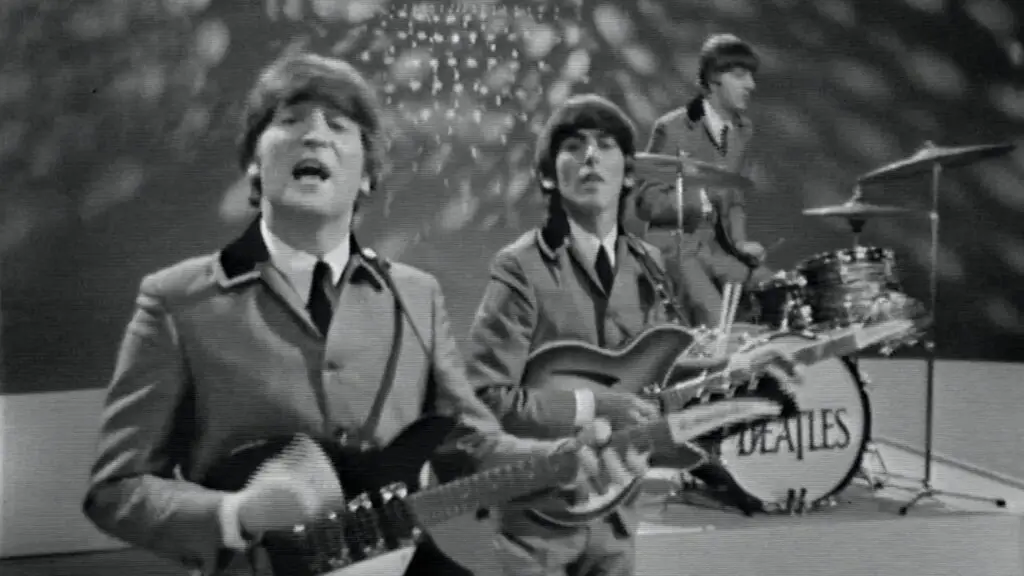
Whilst autographs were allowed, there was no chance of Alec or any of his colleagues posing for a cheeky analogue selfie: “When I joined Tech Ops, I was told, in no uncertain terms, that it was totally forbidden, on pain of dismissal, to bring cameras or any means of recording images or sound into the television studios. This is why very few photographs exist featuring Tech Ops people, the equipment we used, or the programmes that we worked on – and those that do were taken by people who smuggled cameras in and took photos in an opportunistic fashion. Top of the Pops usually had an official BBC photographer to cover some shows, but they were not present for this insert for the Manchester studio, even though it was The Beatles.”
The lack of any photographs from the session makes the remarkable discovery of this long-lost reel of film, which is certain to excite, delight and undoubtedly move fans all over the world, even more precious. Alec’s final memory of the day is from leaving the studio and witnessing first-hand the incredible popularity of the four young pop stars: “There were hordes of girls screaming outside the stage door. My car was parked several streets away and I could still hear the screaming down towards Hammersmith! That was an indication of just how massively popular The Beatles were.”
Thursday 19th March 1964 provides a perfect snapshot of the gruelling schedule the Fab Four endured at the very peak of Beatlemania. Earlier that day, they had shot scenes for A Hard Day’s Night at Twickenham Film Studios, where they were also interviewed by Peter Noble for BBC Light Programme’s Movie-Go-Round. The group were then whisked over to The Dorchester Hotel, where future prime minister Harold Wilson presented them with the Variety Club of Great Britain Award for Show Business Personalities of 1963, before they made their way to the BBC Television Theatre. Having been pulled here, there and everywhere, upon leaving the studio, legend has it that drained drummer Ringo Starr famously quipped “It’s been a hard day… ‘s night!” The rest, as they say, is history.
And now, thanks to the return of a long and winding roll of film, audiences will soon be able to savour the finale of this important moment in Beatles history for the first time in six decades. As for Alec Bray, it will be a chance to relive those distinctive camera moves that have been lodged in his memory ever since. “It is magical to hear that the inserts from that Top of the Pops have been retrieved. I have always been absolutely sure that there should, somewhere across the world, be a copy. The fact that it has finally appeared is so cool; I would dearly love to see it again.”
Film is Fabulous! have returned the digital scan, and the 35mm negative, to BBC Archives. Discussions will be held with the corporation to ensure the content is made available to a wide audience.
MAKE A DONATION
Film is Fabulous! urgently need your support, in order to preserve vulnerable film treasures. Please select an amount from the drop-down box adjacent, and make a one-off payment via PayPal. Options available:
- £5
- £10
- £25
- £50
- £100
If you’d like to donate a larger amount, as a one-off payment, or make a regular donation each month, please email: donate@filmisfabulous.org.uk
Film is Fabulous! Preserving film treasures for future generations.
24th August 2026
Share this post